San Pedro is a mescaline-containing cactus native to the Andes, where it has been used ceremonially for thousands of years under the name Huachuma. Mescaline, its active compound, produces a long psychedelic experience of roughly 10 to 14 hours, and the current evidence for its therapeutic use is early, drawn mostly from traditional practice and naturalistic surveys rather than modern clinical trials. Because of the duration, the physical demands, and its interactions with common medications, a San Pedro experience calls for careful preparation and professional support. This guide serves as your San Pedro mescaline guide.
What Is San Pedro, and Where Does Mescaline Come From?
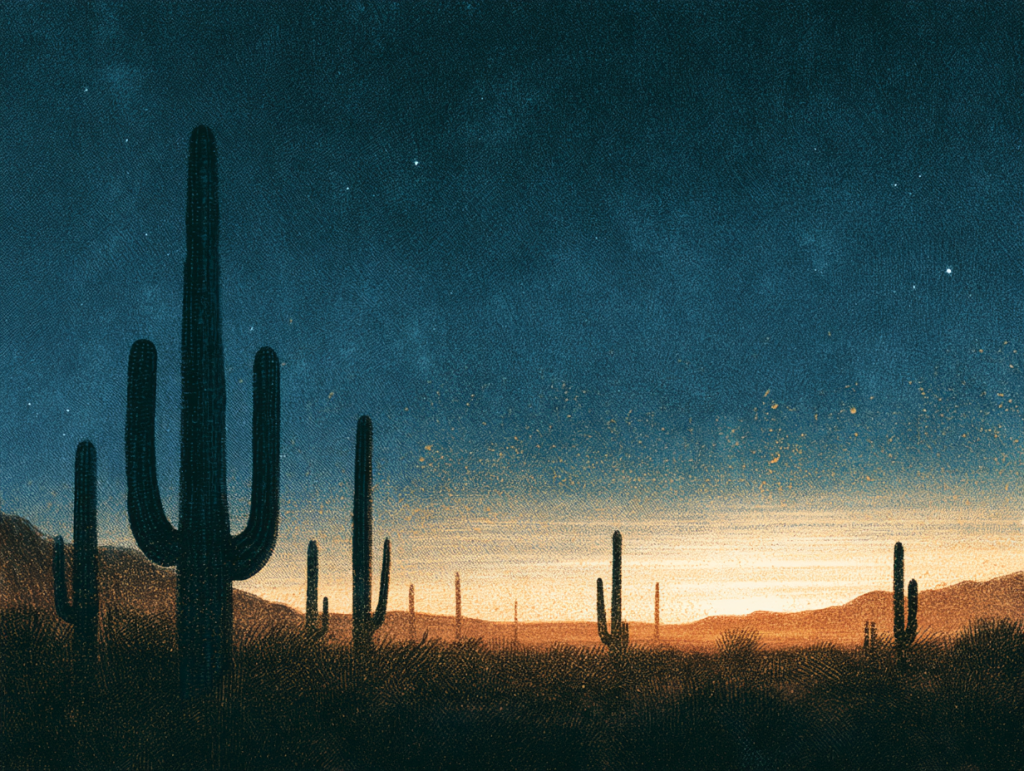
San Pedro is a tall, columnar cactus native to the Andean highlands of Peru and Ecuador. Botanists know it today as Echinopsis Pachanoi, though for decades it was classified as Trichocereus Pachanoi, and both names still appear in the literature. In the cultures where it originated, it carries older names: Huachuma, Wachuma, Achuma, and Aguacolla. The name San Pedro, meaning Saint Peter, is a colonial-era addition, from the idea that the plant could open the gates of a higher realm the way Peter held the keys to heaven.
Its active compound is mescaline, a naturally occurring alkaloid also found in peyote and several related cacti. Mescaline is what makes this a psychedelic plant rather than an ornamental one, and San Pedro is not the only cactus that carries it. The mescaline-bearing cacti most often encountered include San Pedro (Echinopsis pachanoi), Peruvian Torch (Echinopsis peruviana), Bolivian Torch (Echinopsis Lageniformis, or Trichocereus Bridgesii), the North American Peyote (Lophophora Williamsii), and Echinopsis Macrogonus. Each differs in mescaline concentration, so a “cactus dose” means little without knowing the specific plant. Our overview of what to weigh before pursuing a San Pedro experience is a useful companion to this piece.
How Does Mescaline Work?
Mescaline belongs to a different chemical family than most of the better known psychedelics. Psilocybin, LSD, and DMT are all built on a tryptamine backbone. Mescaline is a Phenethylamine, structurally closer to a compound like MDMA than to psilocybin. Despite that difference, it reaches a similar destination in the brain. Its primary action is at the serotonin 2A receptor, the same one classic psychedelics activate to produce their characteristic shifts in perception, mood, and thought.
In practice, that means a temporary change in how the brain organizes information. Ordinary filtering loosens, sensory detail sharpens, and emotional material normally kept at a distance can surface. Many people describe mescaline as warmer and more embodied than other psychedelics, with a strong emotional quality alongside the visual effects. That warmth is part of why it has anchored communal healing settings for so long, though warmth is not the same as gentleness. Historically, mescaline was the first psychedelic to be isolated, by Arthur Heffter in 1896, and synthesized, by Ernst Späth in 1919.
How Has San Pedro Been Used Traditionally?
The ceremonial use of San Pedro is among the oldest documented uses of any psychoactive plant in the Americas. Fossil remains found in the Guitarrero cave in Peru have been dated to roughly 6800 to 6200 BCE, and a carved stone figure at Chavín de Huántar, from around 1300 BCE, shows a mythological being holding a San Pedro stalk, one of the earliest clear depictions of the plant in ritual use. The tradition continued through the Cupisnique, Nazca, Moche, and Lambayeque cultures, and it survived Spanish attempts to suppress it.
In the northern Peruvian healing tradition known as the mesa, a curandero removes the spines and boils slices of the stem for hours into a bitter drink. The ceremony is structured, communal, and oriented toward healing rather than recreation. That origin matters, because the plant was never meant to be taken casually or alone. Support, intention, and a prepared environment were built into its use from the beginning.
What Forms Does San Pedro Come In?
Outside a research setting, people encounter San Pedro and mescaline in several forms. The purified form, mescaline as a measured salt, is rare and mostly confined to research. Most real-world use involves the plant itself:
- Fresh cactus, eaten raw as slices. This is intensely bitter and frequently causes nausea.
- Dried and powdered cactus, often made from the outer green skin, where mescaline is most concentrated. The powder is sometimes taken in capsules for more consistent dosing.
- A boiled decoction or tea, the traditional Andean preparation, made by simmering de-spined slices for hours.
- Reductions and pastes, where the tea is cooked down into a thicker, more concentrated form.
A theme runs through all of these: inconsistency. Mescaline content varies widely between species, between individual plants, and even between parts of the same cactus, and older, slower-grown specimens tend to contain more. This variability is the single most important practical fact about San Pedro, and it shapes everything about dosing.
How Much Mescaline Is a Meaningful Dose?
A threshold dose of pure mescaline is often placed around 100 mg, with a full experience typically between 200 and 400 mg. Those figures describe the isolated compound. Cactus is another matter entirely.
San Pedro is a relatively dilute source. Its mescaline content is commonly cited from a fraction of a percent up to somewhat over one percent of dry weight, and fresh cactus is more dilute still. A full dose can therefore require a large quantity of dried cactus, sometimes several tens of grams, or a long section of fresh stem. Peyote concentrates mescaline far more heavily in its buttons, so the two cacti are not interchangeable by weight. The honest conclusion is that weight-based dosing of San Pedro is unreliable without laboratory analysis of the specific plant, which almost no one has. Two stems of the same length can differ several fold in potency, and that uncertainty is much of what makes unsupervised use risky.
What Does a San Pedro Experience Feel Like?
A San Pedro experience is long. Onset is gradual, often taking one to two hours, and the full arc commonly lasts between 10 and 14 hours. That length sets it apart from shorter experiences: a session consumes an entire day, often with recovery bleeding into the next.
Nausea is common early on, and vomiting, sometimes called the purge, is a frequent and traditionally accepted part of the experience. After that, many describe a gradual opening: heightened sensory perception, emotional clarity, connection to their surroundings, and introspection that can feel gentle or confronting depending on what surfaces. Compared with some psychedelics, the visual component is often less overwhelming at moderate doses, while the emotional and bodily component is pronounced. None of this is guaranteed. The direction an experience takes depends heavily on the person, their preparation, and their set and setting.
What Are the Risks and Contraindications?
Mescaline has low physiological toxicity and low potential for dependence, and the naturalistic research supports that profile. That does not make it safe for everyone, and a few cautions deserve real weight.
Cardiovascular load. Mescaline raises heart rate and blood pressure. Anyone with significant cardiac disease or uncontrolled hypertension should treat this as a serious concern rather than a footnote.
Medication interactions. Mescaline is serotonergic. Combining it with MAO inhibitors (MAOI) or other strongly serotonergic drugs can be dangerous, and SSRIs can both blunt the effect and complicate the clinical picture. Lithium in particular carries serious risk when combined with psychedelics. Anyone taking psychiatric medication should talk with a physician about interactions well in advance, and should never stop a medication abruptly on their own.
Psychiatric history. A personal or family history of psychosis, schizophrenia, or bipolar disorder is a standard reason to pause, because psychedelics can precipitate or worsen these conditions. A fuller account is covered in our guide to who should pause before pursuing psychedelic therapy.
The long duration and the purge. The length of the experience is itself a risk factor. Fatigue, dehydration, and emotional overwhelm are all more likely across 12 hours than across three, one more reason steady support matters.
Is San Pedro Legal?
The legal picture is confusing, and it depends on the country and on what exactly is being possessed. In the United States, mescaline is a Schedule I controlled substance, so possessing or preparing it for consumption is illegal at the federal level. The living cactus sits in a gray zone. San Pedro is widely and legally sold as an ornamental plant, and growing it is generally lawful, but preparing it for ingestion crosses into illegal territory, because that involves the controlled compound itself.
One narrow religious exception in US law applies to peyote used by enrolled members of the Native American Church, not to San Pedro. Legal ceremonial and retreat use of San Pedro does exist in parts of South America, including Peru and Ecuador. If you are weighing an experience abroad, the same cautions that apply to any psychedelic retreat abroad apply here. This is general information rather than legal advice, and laws change, so verify the current status for your own location before acting.
What Does the Evidence Actually Show?
Here is the part that calls for the most restraint. Modern clinical research on mescaline is thin. Unlike psilocybin or MDMA, it has not been the subject of large contemporary controlled trials, and much of what exists is decades old or based on self-report.
What we do have is suggestive rather than conclusive. A 2021 naturalistic survey of 452 adults who had used mescaline found that among those with histories of depression, anxiety, PTSD, or alcohol use disorder, a large majority (roughly 68 to 86 percent) reported subjective improvement after their most meaningful experience. A related epidemiological study found a favorable safety profile and low abuse potential in naturalistic settings, and a 2026 systematic review identified only around ten studies suitable for analysis, reporting therapeutic signals across mood, well-being, and substance use while stressing how limited the evidence base still is. The responsible summary is that mescaline therapy has a long traditional record and encouraging early data, but not the clinical validation that some other psychedelics have now begun to earn. Anyone drawn to it for a specific condition should hold that distinction clearly.
Why Set, Setting, and Support Matter So Much Here
San Pedro is a long, physically demanding, chemically variable experience with real medical and legal considerations and an evidence base that is still early. Those are exactly the conditions under which preparation and professional support make the largest difference.
A well-supported process addresses the risks that unsupervised use leaves open: proper medical and psychiatric screening, a careful review of medications and interactions, a prepared and safe setting for a day-long experience, and integration support afterward. JourneyŌM does not provide substances. What it provides is the safety, vetting, and continuity of care that a plant like this one asks for.
Ready to Explore What’s Right for You?
JourneyŌM matches you with vetted, professional guides and supports you through every stage of the process. Here’s how to take the next step.
- Start with a self-assessment: Take the Psychedelic Self-Assessment
- Talk to us first: Book a Free 15-Minute Exploratory Call
- Ready to go deeper: Schedule a Concierge Consult (see our pricing page)
- Agin-Liebes, G., Haas, T.F., Lancelotta, R., Uthaug, M.V., Ramaekers, J.G., & Davis, A.K. (2021). Naturalistic Use of Mescaline Is Associated with Self-Reported Psychiatric Improvements and Enduring Positive Life Changes. ACS Pharmacology & Translational Science, 4(2), 543–552.
- Uthaug, M.V., Davis, A.K., Haas, T.F., et al. (2022). The epidemiology of mescaline use: pattern of use, motivations for consumption, and perceived consequences, benefits, and acute and enduring subjective effects. Journal of Psychopharmacology, 36(3), 309–320.
- Ethnopharmacological Use of Mescaline for Psychiatric Disorders: A Systematic Review (2026). International Journal of Molecular Sciences, 27(7), 3081.
- Bussmann, R.W., & Sharon, D. (2006). Mescaline and the San Pedro cactus ritual: archaeological and ethnographic evidence in northern Peru. PubMed. PMID: 16625512