
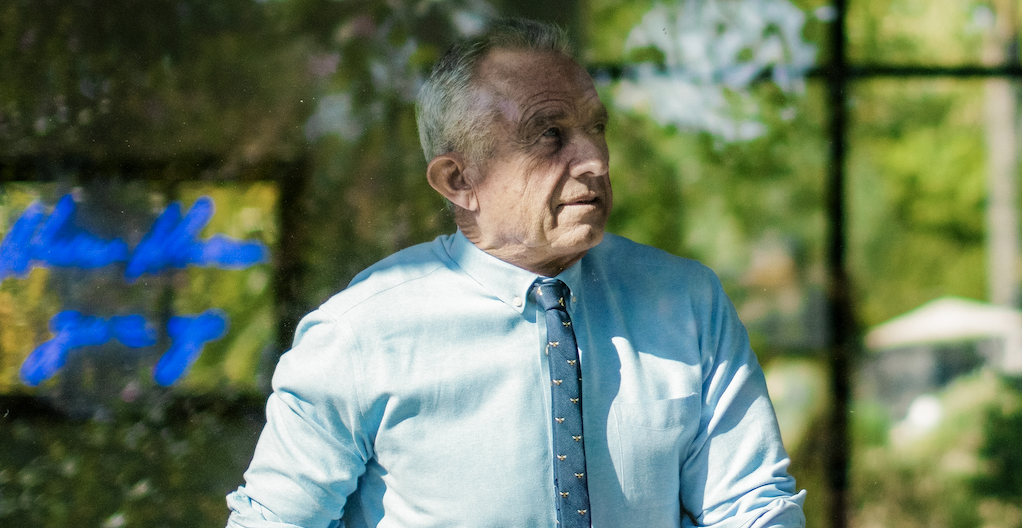
RFK Jr. psychedelic therapy support has brought real political attention to substances like psilocybin, MDMA, and ibogaine. For seekers already exploring this space, the shift matters. It does not, however, change what responsible engagement looks like at the individual level.
If you have been researching psychedelic therapy for any length of time, you have probably noticed that the tone of the public conversation has shifted. A few years ago, this was a niche subject confined to academic papers, clinical trials, and wellness-adjacent circles. Now it shows up in federal budget discussions, presidential campaigns, and mainstream news cycles. Robert F. Kennedy Jr. became one of the most prominent political voices to advocate publicly for psychedelic-assisted therapy, naming MDMA and ibogaine as tools with genuine potential for veterans, people with addiction, and those living with treatment-resistant depression. Understanding what that advocacy actually represents, and what it does not, is worth your time as someone navigating this space carefully.
What Kennedy Actually Said and Why the Details Matter
Kennedy’s public position, as reported across multiple outlets including the Associated Press, centered on federal support for psychedelic therapy access rather than broad legalization. He emphasized structured, safety-conscious frameworks and specifically referenced underserved communities and veterans as populations who could benefit most. He also acknowledged integration support as a necessary part of the process, which reflects a more informed understanding of how these therapies actually work than most political commentary tends to offer.
His interest in psychedelics did not come from nowhere. Kennedy has spoken openly about his own experiences and his long-standing curiosity about their therapeutic potential. That personal dimension adds credibility for some people and raises reasonable skepticism in others. Both responses make sense. What matters for your purposes is treating his advocacy as one informative data point in a much larger picture, not as a green light to move faster than you are ready to move.
What Political Momentum Does and Does Not Change
Political attention accelerates things: research funding, regulatory review timelines, institutional credibility, and public awareness. Those are all meaningful developments for the long-term trajectory of psychedelic-assisted care. The clinical work coming out of institutions like Johns Hopkins and NYU has been building a careful evidence base for psilocybin and MDMA over the past decade, and political interest creates conditions in which that work can be taken more seriously at the federal level. For where federal and state policy actually stands right now, rather than where it is being argued it should go, see our mid-year update on psychedelic policy in the USA.
Here is where things get more nuanced, though. Political momentum also creates a rush of providers, platforms, and products that are not vetted, not properly trained, and not safe. When any health modality enters the mainstream quickly, the supply side races to meet demand, and quality control consistently lags. That pattern has played out in other wellness categories, and there is no reason to expect psychedelic therapy to be exempt from it. This is not a reason to disengage from the space. It is a reason to be deliberate about who you trust and how you begin.
The practical implication for seekers is straightforward: the fact that RFK Jr. psychedelic therapy advocacy is reshaping policy conversations does not change what a responsible individual process looks like. Preparation still matters. Integration still matters. The quality and qualifications of the guide you work with still matter enormously. None of those fundamentals shift because a political figure expressed support.
Ibogaine and MDMA: Why Kennedy Named These Substances Specifically
Kennedy’s emphasis on ibogaine for addiction treatment and MDMA for trauma reflects the current state of the clinical research fairly accurately. Ibogaine has shown meaningful potential for interrupting opioid dependence, with several clinics operating legally in countries outside the United States. It also carries serious contraindications, particularly around cardiac risk, which makes thorough medical screening non-negotiable before anyone considers it as an option. MDMA-assisted therapy for PTSD went through an FDA review process and faced a rejection in 2024 due to concerns about trial methodology, though research and advocacy in that area are continuing. Both substances represent genuinely promising directions, and both require considerably more caution than the current media coverage tends to suggest.
Psilocybin, while not the focus of Kennedy’s public comments, remains the most broadly studied psychedelic in the current clinical wave, with ongoing trials addressing depression, anxiety, and end-of-life distress. Oregon has established a legal framework for supervised psilocybin services, and Colorado has passed similar legislation. These represent real access points, though the infrastructure in both states is still developing and the experience of working through those systems varies significantly depending on the provider.
The Noise Problem: What to Watch for as a Seeker
One direct consequence of psychedelics entering mainstream political discourse is that it becomes harder to separate credible information from marketing. Retreat centers, online guides, supplement companies, and coaches are all positioning themselves as the safe, professional option in a newly legitimate industry. Some of them are legitimate. Many are not. A polished website, a podcast appearance, or a page of glowing testimonials tells you very little about actual qualifications, safety protocols, or what happens when something goes wrong mid-session.
When evaluating any provider, focus on a few concrete questions. Do they conduct a thorough intake process before anything else happens? Do they ask about your mental health history, current medications, and personal intentions, or do they move quickly toward scheduling? Do they have a clear, documented protocol for managing difficult reactions? Do they offer structured integration support after the experience, or does their involvement end when the session does? These are not abstract quality markers. They are the practical difference between a professionally supported experience and one that leaves you more disoriented than when you started.
What Responsible Support Actually Looks Like
At JourneyŌM, the model was built specifically to address the trust problem that exists in this space. We are not a marketplace where anyone can create a listing and call themselves a guide. Every guide we work with goes through a thorough vetting process covering training background, clinical or therapeutic experience, integration philosophy, and safety record. When a seeker comes to us, we do not hand them a list and step back. We take the time to understand their history, their readiness, and their intentions, and then we make a personalized match based on that specific picture.
The political conversation around RFK Jr. psychedelic therapy support is shifting what is possible at the systemic level, and that is worth acknowledging. What actually protects you as an individual seeker, though, is the quality of support you have around your specific experience: how you prepare, who you work with, and how you process what happens afterward. Integration is where the lasting benefit tends to emerge, and it is also the part most frequently skipped by providers whose primary interest is filling sessions rather than supporting outcomes.
If you are at the stage of reading and researching without being sure what comes next, a structured consultation is a useful place to start. Not to push you toward any particular decision, but to give you a clear-eyed picture of what responsible engagement looks like so you can move forward on your own timeline and with your own judgment intact.
The Broader Context: This Is Still Evolving
Kennedy’s public advocacy, alongside the broader policy momentum building around psychedelic-assisted care, represents a genuine shift in how these substances are discussed at the highest levels of government. Federal law has not changed. Access remains limited and highly context-dependent. The research base, while promising in several areas, is still early in others. Anyone telling you this field is fully mapped out is either misinformed or trying to sell you something.
What we know so far is that certain psychedelics, used in structured and professionally supported settings with appropriate preparation and follow-up care, show real potential for people who have not found relief through conventional treatments. We also know that the set, the setting, and the quality of the guide matter as much as the substance itself. That knowledge, grounded in the actual research rather than the news cycle, is what should be shaping your decisions as you navigate this moment.
If the current political conversation has prompted you to take a closer look at your own situation, the most useful first step is an honest assessment of where you are: your mental health history, your intentions, and the support system you have around you. From there, finding trustworthy guidance is a matter of knowing what to look for, and that is exactly where we can help.
Ready to take a grounded next step?
- Is This Right for Me? — Self-Evaluation — A confidential self-assessment to help you understand your readiness and whether a guided experience is a fit. The right starting point if you’re still exploring.
- Start with a Conversation — A complimentary 15-minute call with the JourneyŌM team. No pressure, just clarity on where you are and what’s possible.
- Concierge Consultation — A full intake session for seekers ready to move forward. We listen, assess fit, and only proceed to matching if it’s right for both sides. See pricing